

Tensions across Europe continue to rise as NATO forces respond to repeated Russian air activity. A recent incident over the Baltic Sea has once again put defense systems on alert and drawn attention to growing security risks in the region.
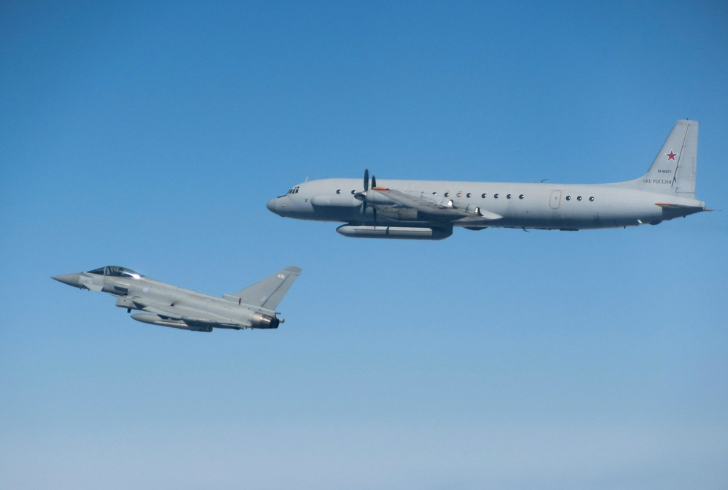
Poland quickly deployed its F-16 fighter jets after spotting a Russian Il-20 reconnaissance aircraft near Western defense positions. The aircraft flew in international airspace, yet its behavior raised serious concerns. It did not file a flight plan, and it kept its transponder turned off, which made tracking more difficult.
This marks the second such flight within a single week. Polish military officials described the move as a clear provocation.
The Polish Armed Forces Operational Command stated, “This type of provocative action by the Russian Federation does not go unanswered – we are vigilant, we respond, and we remain in constant readiness to protect Polish airspace.”
Poland Highlights Air Defense Readiness

Władysław Kosiniak-Kamysz, Poland’s Deputy Prime Minister, addressed the situation and pointed to the pressure these incidents place on defense systems. He stated that “the provocative actions of the Russian Federation are testing our air defense systems.”
He also emphasized the continuous readiness of military personnel, adding, “thanks to the constant combat readiness of pilots, soldiers, and ground crew, Polish skies remain safe.”
Another remark reinforced operational posture: “Wojsko Polskie is ready every day for an immediate response and protection of airspace.”
Strategic Sensitivity in the Baltic Region
Poland shares a roughly 130-mile border with Russia’s Kaliningrad region, a key factor in ongoing security planning. Close to this area lies the Suwałki Gap, a narrow 60-mile land corridor between Poland and Lithuania. Defense analysts often refer to it as NATO’s most vulnerable stretch due to its positioning between Russia and Belarus.
Earlier in the week, another Russian Il-20 aircraft was intercepted under similar conditions. Military reports confirmed it operated in international airspace without a declared flight plan and with tracking systems disabled.
UK Reports Submarine Surveillance Activity
Recent developments are not limited to airspace. The United Kingdom revealed a covert Russian submarine operation in the North Atlantic. This mission targeted vital energy and data cables under the sea.
Defense Secretary John Healey confirmed that British and allied forces tracked a Russian attack submarine along with two spy submarines for nearly a month. During a press conference on April 9, he issued a direct warning.
He said, “We see your activity over our cables and our pipelines, and you should know that any attempt to damage them will not be tolerated and will have serious consequences.”
Officials reported that Russia used an Akula-class submarine as a distraction. Meanwhile, two GUGI-operated submarines focused on surveillance tasks. The attack submarine later returned to Russian waters, but the spy vessels stayed active in the area.
Recent actions in the Baltic Sea and the North Atlantic show a clear pattern of rising military activity. Poland’s quick response and the UK’s close monitoring highlight strong defense coordination. These developments keep NATO forces on alert and show how closely key regions remain under watch.