

A jet engine and a car engine serve the same basic purpose — creating motion — but the way they produce power is completely different. Everything from fuel type to operating speed separates the two machines. Even their rotating speeds follow different engineering rules, which makes jet engine RPM figures surprisingly interesting.
Most passenger cars reach a redline between 6,000 and 7,000 rpm. Sports cars push higher numbers. The “Honda S2000,” for example, became well known for its 9,000 rpm limit, while Formula 1 engines and some motorcycles can climb close to 15,000 rpm.
Jet engines operate in a more complex way because several internal components rotate at different speeds. Modern turbofan engines use separate high-pressure and low-pressure turbine systems, and each section works within its own rpm range.
How Fast Does a Jet Engine Spin?
One of the best-known aircraft engines is the CFM56 series, produced by CFM International. It powers several commercial aircraft, including multiple versions of the “Boeing 737.” The engine family is also recognized as the best-selling jet engine series ever built.
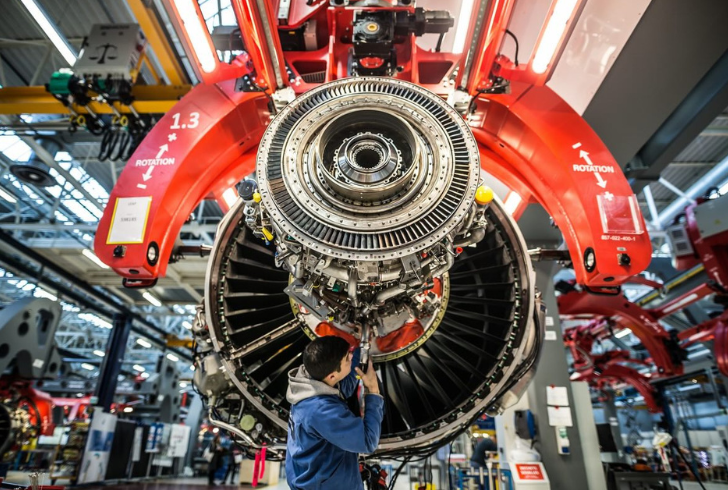
The CFM56-7 variant generates up to 27,300 pounds of thrust. While thrust does not directly convert into horsepower, the output is far beyond what a standard automobile engine can produce, especially considering that a “Boeing 737” cruises at speeds exceeding 500 mph.
According to data from CFM and Stanford University, the engine’s high-pressure turbine reaches a maximum rotational speed of 15,183 rpm. That figure places it near the upper range of Formula 1 engine speeds. The low-pressure turbine spins much slower, topping out at 5,380 rpm, which is closer to the operating range of an everyday commuter car.
Why Jet Engines Use Different RPM Levels
Jet engines rely on multiple rotating assemblies because each section performs a different task. The high-pressure turbine focuses on compressing incoming air at extremely high speeds, while the low-pressure section helps drive the larger fan blades that move massive amounts of air through the engine.
This split-speed design improves efficiency, fuel use, and airflow management during flight. Car engines, by comparison, use a single crankshaft speed to manage the entire powertrain.
Jet engine rpm numbers are not as extreme as many people expect. Some sections spin at speeds similar to racing engines, while others operate closer to ordinary road cars. The major difference comes from how the engines create power. A car engine transfers energy through mechanical force, while a jet engine produces thrust by accelerating air at tremendous speed.